Office and administrative buildings
Lease duration, tenant quality and the ESG profile influence pricing. Transitional structures can fund repositioning before re-letting.

Commercial lending depends on lease duration, tenant creditworthiness and alternative-use potential. Alternate Capital structures finance from €750,000 to €180 million for investors, portfolio owners and businesses in Germany, Austria and Switzerland.

Each asset class has different lenders and assessment priorities.
Lease duration, tenant quality and the ESG profile influence pricing. Transitional structures can fund repositioning before re-letting.
Food retail anchors and long leases can support lender appetite for retail parks and local shopping assets.
Location, building specification and suitability for alternative occupiers are central to lender assessment.
The lease, operator creditworthiness and operating concept are central. Specialist lenders assess these assets differently from conventional banks.
A mixed-use asset requires assessment of both components. An appropriate structure can support competitive terms.
Several properties within one facility, including cross-collateralisation, property substitution clauses and staged releases.
The starting point is sustainable cash flow: How secure is the rent, how long do the leases run, and what happens when they expire? These questions drive the key metrics of commercial property finance: debt service coverage (DSCR), interest service coverage (ISCR), loan-to-value and weighted average lease term (WALT).
Property factors also matter: suitability for alternative users, condition and ESG requirements, including energy certificates and CRREM pathways, alongside sponsor quality. Commercial finance is therefore more individual than residential lending. It requires structured negotiation rather than a standard rate table. We support this through preparation and approaches to banks and debt funds.

A conventional Senior loans with a long fixed-rate period can provide lower-cost finance for stable assets and creditworthy tenants.
Transitional finance with a capital expenditure facility, using a Whole loans or Bridge finance until re-letting is stabilised, followed by investment property finance.
Combine maturing loans, substitute properties and assess available borrowing capacity, supported by Refinancing and Additional borrowing.
Land, construction and pre-letting, with a project structure comparable to Property development finance and an exit through a forward sale or long-term ownership.
Commercial finance also serves businesses seeking to acquire their premises rather than rent, or to release equity through an alternative to sale and leaseback by borrowing against the property.
Borrowing retains ownership of the property and can provide working capital or funding for expansion without a sale. The business still needs to demonstrate sustainable debt servicing capacity.
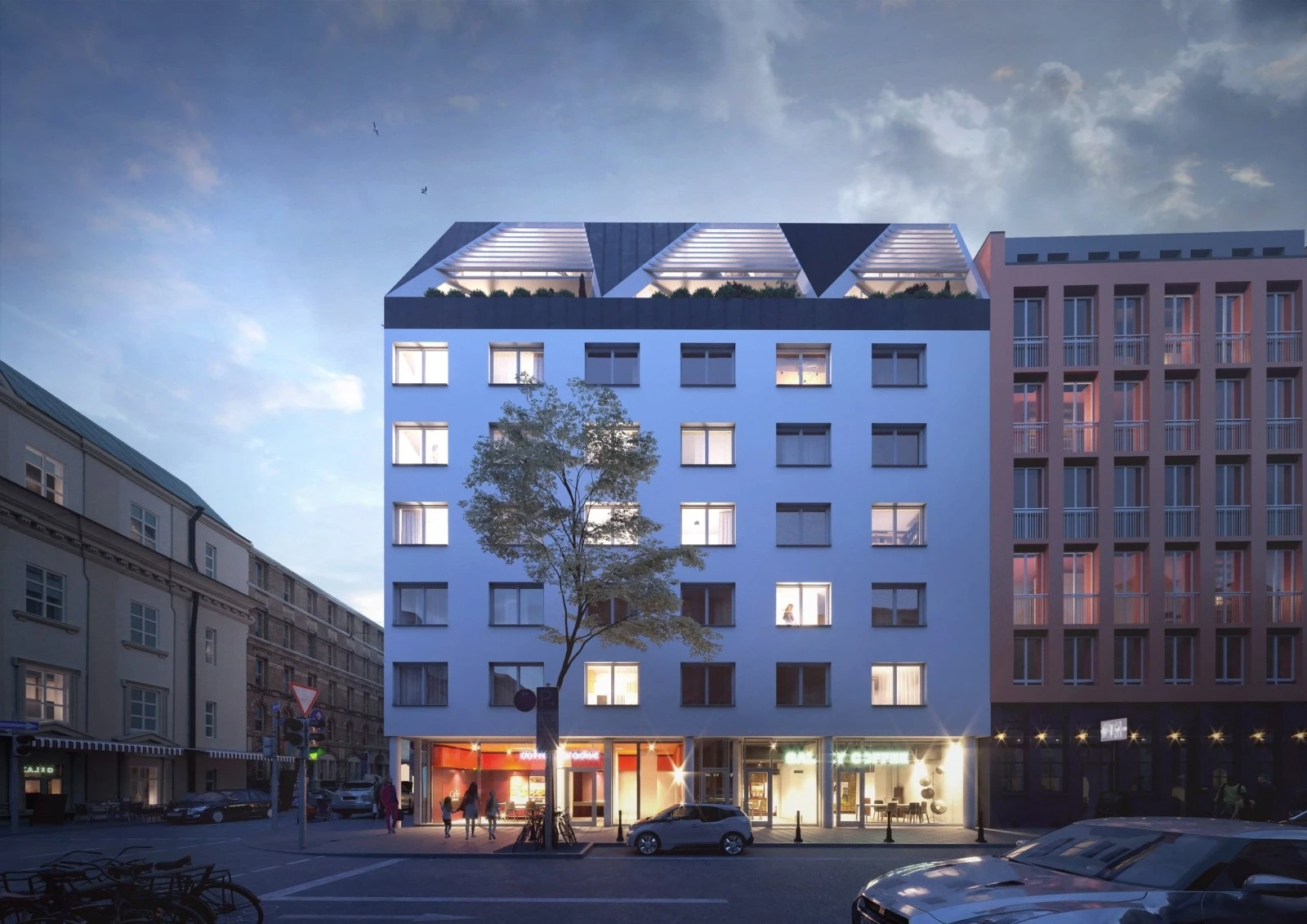
Property particulars, a tenancy schedule with lease terms, rental and service charge information, any valuation, available equity and the preferred structure. To start, use our Initial assessment.
Yes, through value-add structures supported by a realistic letting plan. Leverage is generally lower and pricing higher; after stabilisation, the asset can move to longer-term investment finance.
Energy efficiency and refurbishment pathways increasingly influence valuations, margins and lending appetite. Some green loan programmes offer pricing benefits. We assess suitability.
Yes. Germany, Austria and Switzerland are our focus. Further details for Austria: Property finance in Austria.
Energy efficiency, emissions and refurbishment plans have become important lending criteria. Lenders increasingly consider the risk of stranded assets: buildings that may fall behind future requirements and lose value or letting appeal.
Inefficient assets can become more costly to finance or harder to refinance. Green loans and funding programmes may provide opportunities for owners investing in improvements. A credible refurbishment pathway or certification such as BREEAM, DGNB or LEED can support lender discussions.
We assess relevant green loan providers, how energy-related capital expenditure can fit within the facility and which funding programmes may be suitable.
Including the building’s condition and a realistic improvement plan from the initial enquiry helps lenders understand the future cash flow and investment need. We bring the ESG assessment into the first approach.
We consider whether a green loan or KfW or regional funding programme is appropriate and assess the financial effect of energy improvements over the financing term. This can support both funding discussions and the asset’s longer-term marketability.
Thus, the ESG requirement becomes a double benefit: better financing conditions today and a value-stable, future-proof property tomorrow.
Send details of the property, tenancy position and plans. We will assess suitable lenders and financing structures.

Jürgen Kronawitter specialises in structured real estate finance. He helps property investors, developers and portfolio owners implement complex financing solutions. His work focuses on structuring and arranging senior loans, whole loans, mezzanine capital and bridge loans, as well as tailored financing for acquisitions, investment properties, developments and refinancing. By combining conventional bank lending with alternative capital sources, he develops financing structures for domestic and international property projects.
Jürgen Kronawitter on LinkedIn → More about the author